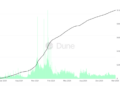


Vitalik proposes anti-correlation incentives to promote decentralization in staking protocols, penalizing misbehaving actors and implementing them in various scenarios, backed by empirical data.
Vitalik Buterin recently published a thought-provoking article that delves into the concept of supporting decentralized staking through the use of anti-correlation incentives. Authored by Vitalik Buterin, the article offers preliminary research and encourages independent replication attempts to validate the proposed ideas.
The primary focus of the article is to address the challenge of incentivizing better decentralization within staking protocols. The author suggests that penalizing correlations among actors can be an effective mechanism to encourage a more distributed and resilient ecosystem.
The current approach in Ethereum’s slashing mechanics already incorporates an element of anti-correlation incentives. However, the article argues that relying solely on edge-case incentives, which may only arise in highly exceptional attack situations, might not be sufficient to drive decentralization.
To further enhance anti-correlation incentives, the article proposes extending this concept to address more common failures, such as missing attestations. It posits that larger stakers, including wealthy individuals and staking pools, often run multiple validators on the same internet connection or physical computer, leading to correlated failures. The article acknowledges that expecting these stakeholders to set up independent physical setups for each validator would eliminate economies of scale in staking.
To validate the hypothesis, the author combines attestation data from recent epochs with information mapping validator IDs to publicly-known clusters. By analyzing the occurrences of co-failures (instances where two validators within the same cluster fail during the same slot), the article provides empirical evidence of excess correlated failures within clusters. This data supports the notion that validators in the same cluster are more likely to miss attestations simultaneously compared to validators in different clusters.
Building upon this analysis, the article proposes a penalty mechanism based on the current number of missed slots relative to the average of the last 32 slots. This mechanism ensures that penalties for missed attestations are proportional to the number of validators failing in a given slot compared to recent slots. The article highlights the resilience of this mechanism, as it is not easily manipulable and does not provide incentives for actors to intentionally fail.
The research presented in this article contributes to the ongoing discourse on decentralized staking and provides insights into the potential benefits of anti-correlation incentives. By incentivizing decentralization and mitigating correlated failures, staking protocols can become more robust and resistant to attacks.
It is important to note that the research presented in the article is preliminary, and the author encourages independent replication attempts to support the findings. The code used for the analysis is available on GitHub for reference.
In conclusion, supporting decentralized staking through anti-correlation incentives offers a promising avenue for enhancing protocol decentralization. By penalizing correlations among misbehaving actors, staking protocols can foster a more robust and resilient ecosystem. Further research and experimentation in this area will contribute to the evolution of decentralized blockchain networks like Ethereum.
Image source: Shutterstock
Credit: Source link