

In finance, ‘primitives’ serve as the basic building blocks for building decentralized applications (dApps). For instance, a USDC stablecoin primitive might combine with a lending protocol Aave to serve as an anchored collateral. This stablecoin cannot be decomposed into further financial constructs. Rather, it is used as a building component, making it a primitive.
But what if the same logic applied to memes themselves? Could the jokes, images, and viral trends of the internet be the new primitives of finance?
With this in mind, let’s examine the latest entry into the memecoin market – Little Pepe (LILPEPE) – after we discern what memes are really about.
Memes as Units of Cultural Transmission
Befitting the nature of financial markets, the term “meme” originated from Richard Dawkins’ 1976 book The Selfish Gene. Specifically, genes create culture, as the sum total of what genes are capable of expressing, which then creates memes as units of expression. And just like genes, memes mutate and undergo a Darwinian selection process.
The fittest memes get to spread rapidly and widely, while unfit ones die off. In other words, that doesn’t mean there is such a thing as the ‘best meme’ but one that is best suited for a specific environment. That environment is typically defined by the in-group/out-group dynamic.
For example, the most recent meme virality came from the “No Kings” rally in which an elementary school teacher Lucy Martinez pointed to her neck in an aggressive manner, referring to the gushing wound of the assassinated conservative activist Charlie Kirk.
Such a gesture is a typical meme in the making:
- Energized from in-group/out-group cleavage.
- Transmits the signal of who belongs, who defies and who bleeds.
- Compact, easily understood and replicable, leveraging prior viral assassination.
This meme, in particular, operates as the emotional neurotransmitter of collective ideology. It compresses power, status and exclusion into a single, reproducible gesture.
Depending on what happens to the originator – Lucy Martinez – that gesture could achieve memetic escape velocity. If Martinez is somehow sanctioned, this itself could boost the act as the go-to signal against the other.
Memes in Financial Markets
Now that we understand the memetic potential from a fresh example, it is easy to see how financial markets operate in much the same way but on an even more fertile ground. Due to the sheer complexity of the crypto market, data compression is inherent to it.
This is why it is so common to see memes such as “diamond hands”, “HODL”, or “buy the dip”. Consequently, memecoins are engineered from the bottom up to become memes themselves. Their purpose is to compress a market narrative into a tradable token.
Although some memecoins boast utility or fundamentals, the bulk of them effectively concentrate collective vibes into price action.
In contrast, some investors prefer asset classes built on fundamentals rather than sentiment – such as dividend investing, which focuses on companies with consistent earnings and reliable cash flows.
Therefore, although memecoins function like derivatives of sentiment, they are structurally financial primitives because their value is self-referential, driven by narrative, communal attention and liquidity.
Let’s examine how Little Pepe (LILPEPE) plays on that intangible social energy.
Diving Into Pepe Memetics
Of all the memes, one of the most enduring ones is Pepe the Frog, originating from Matt Furie’s comic series “Boy’s Club” in 2005. However, as a laid-back anthropomorphic frog, Pepe soon achieved memetic escape velocity across sites such as Tumblr and 4chan.
Just prior to President Trump’s first term, the “alt-right” movement co-opted Pepe, serving as a dog whistle in, once again, group dynamics. The primary reason for Pepe’s success is the chill frog’s universatility. Namely, people can express complex emotions (narratives) with visual shorthand. That shorthand then serves to carve a community of like-minded people.
Out of dozens of Pepe memecoins, Pepe (PEPE) is still the most capitalized one at $2.9 billion, having launched in April 2023. Pepe’s popularity largely stems from its first-mover advantage, simple name and no transactional fees. During 2025, traders had multiple opportunities to tap into PEPE’s volatility for outside gains, but the YTD result still reveals a depreciating memetic asset.
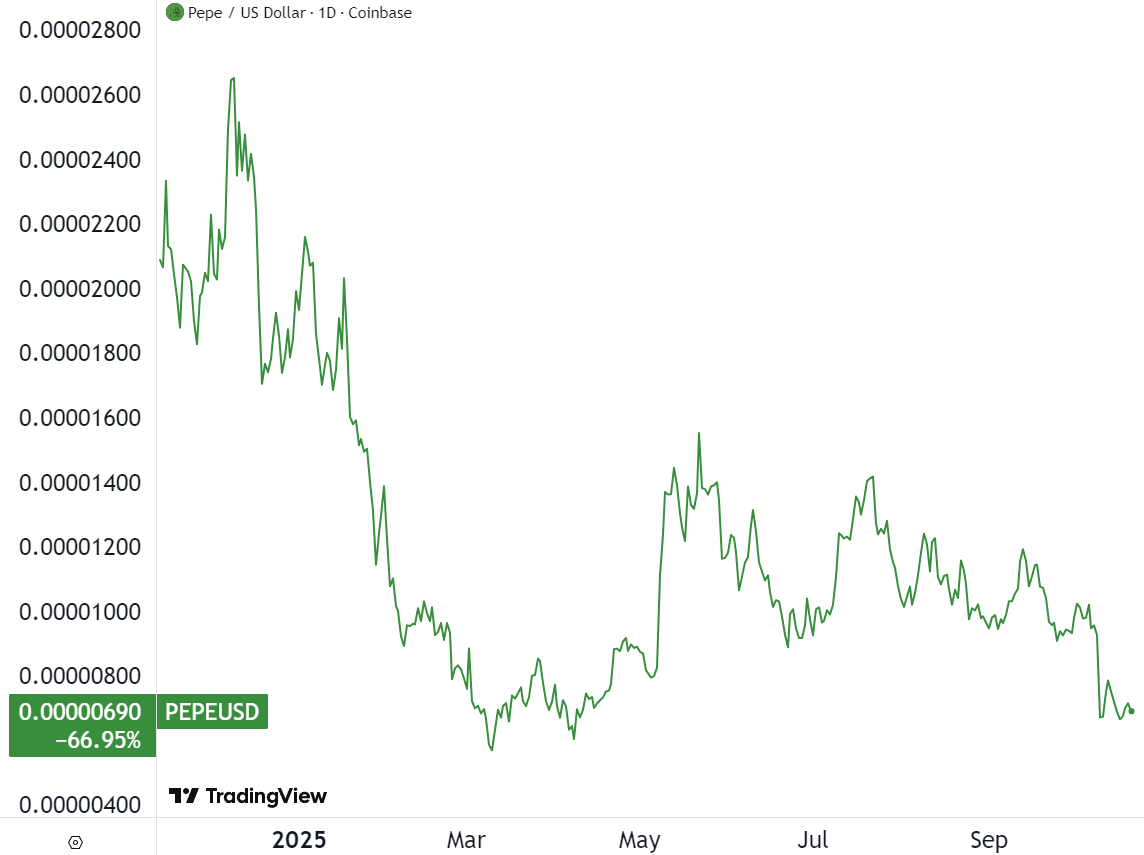
As with other memecoins, one never knows when large holders will erect a sell pressure, triggering a selloff stampede. And because PEPE lacks fundamental utility, relying on hype and communal sentiment instead, the token’s valuation is perpetually at the mercy of collective psychology.
Little Pepe (LILPEPE) is a relatively new addition into the ERC-20 memecoin ecosystem, having launched in early September. Over a month, LILPEPE achieved the opposite performance to PEPE, gaining +65.9% value, despite the recent crypto market crash.
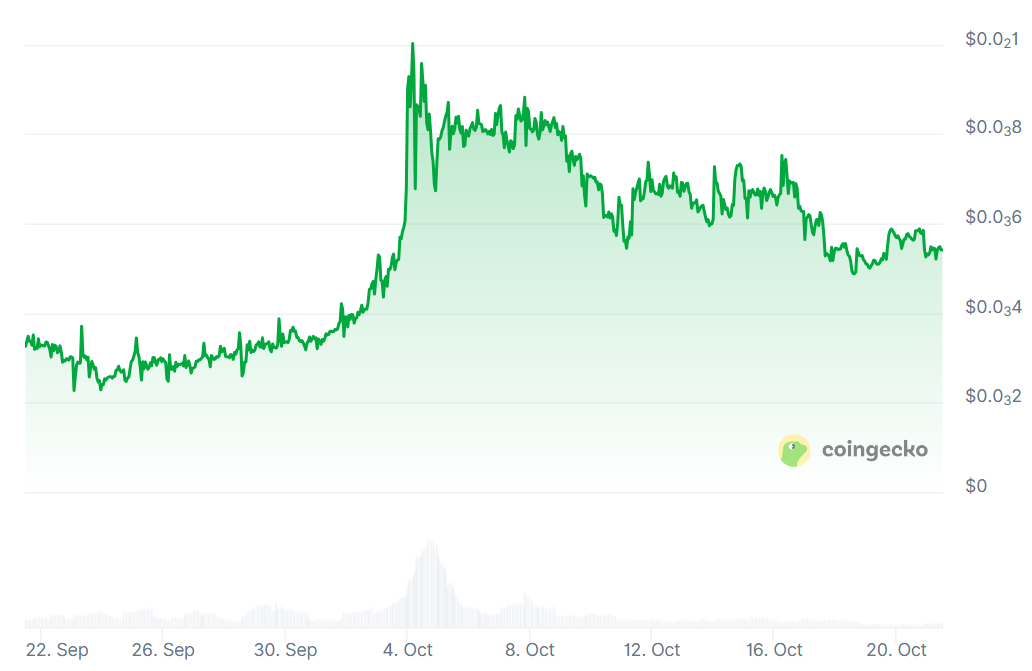
The main narrative centering LILPEPE is the next-gen layer-2 blockchain promise of low transaction fees, no taxes and rugpulls, high speed and “pure meme magic”. The memecoin is capped at 100 billion tokens, arranged in the following tiers:
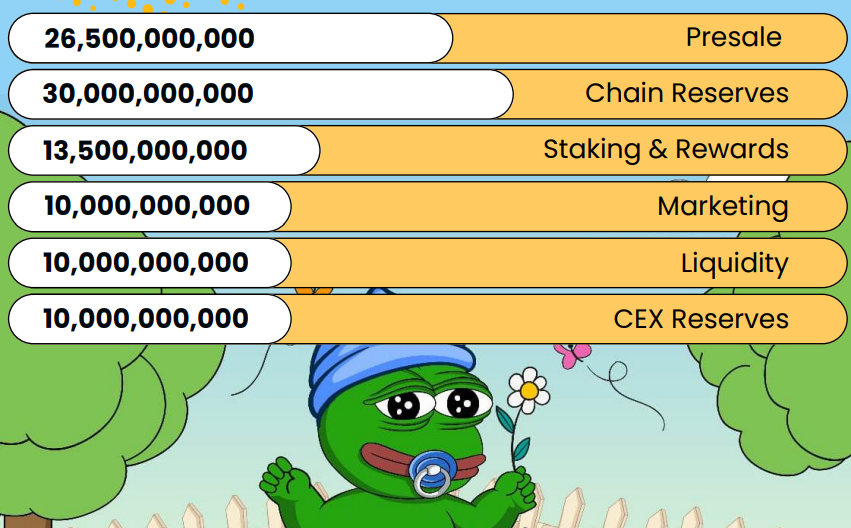
With 10% of the budget dedicated to marketing efforts to spread memes and influencer collabs, LILPEPE is hinting on big name partnerships for “max vibes”. In other words, for both PEPE and LILPEPE, the narrative is not so much memetic as it is about performing value creation through communal participation.
When the alt-right used Pepe, it had organic virality as it clashed against the sacred cows (top memes) of society. As such, the meme had an energizing edge on its own, spreading wider and faster, without design or coordination.
In contrast, the new generation of Pepe memecoins operates in a closed loop. Their virality is manufactured instead of emergent, which limits their reach. In all likelihood, LILPEPE will share the depreciating arc of PEPE, because financial theater is less exciting than culture wars.
The Bottom Line
Memes are not just cultural artifacts. They are the scaffolding of society. One could say that the entire post-WWII narrative is a collection of memes that inform all aspects of culture, signaling permissibility. When friction arises against those dominant memes, this is when counter-memes gain their energy, as demonstrated by Pepe preceding President Trump’s first election.
Memecoins, however, are more post-memetic than memetic. When virality is engineered rather than emergent, it ceases to be a spontaneous cultural force and becomes indistinguishable from a marketing campaign.
And like all campaigns, even the most viral ones grow stale. That is why, eventually, the market treats memecoins exactly as they behave – not as living memes, but as fleeting promotions dressed in the language of culture.
Yet in the end, it doesn’t matter whether memecoins are culture or gambling. The market will keep creating and trading them, though participants should remember that virality is no substitute for fundamentals.
Credit: Source link