

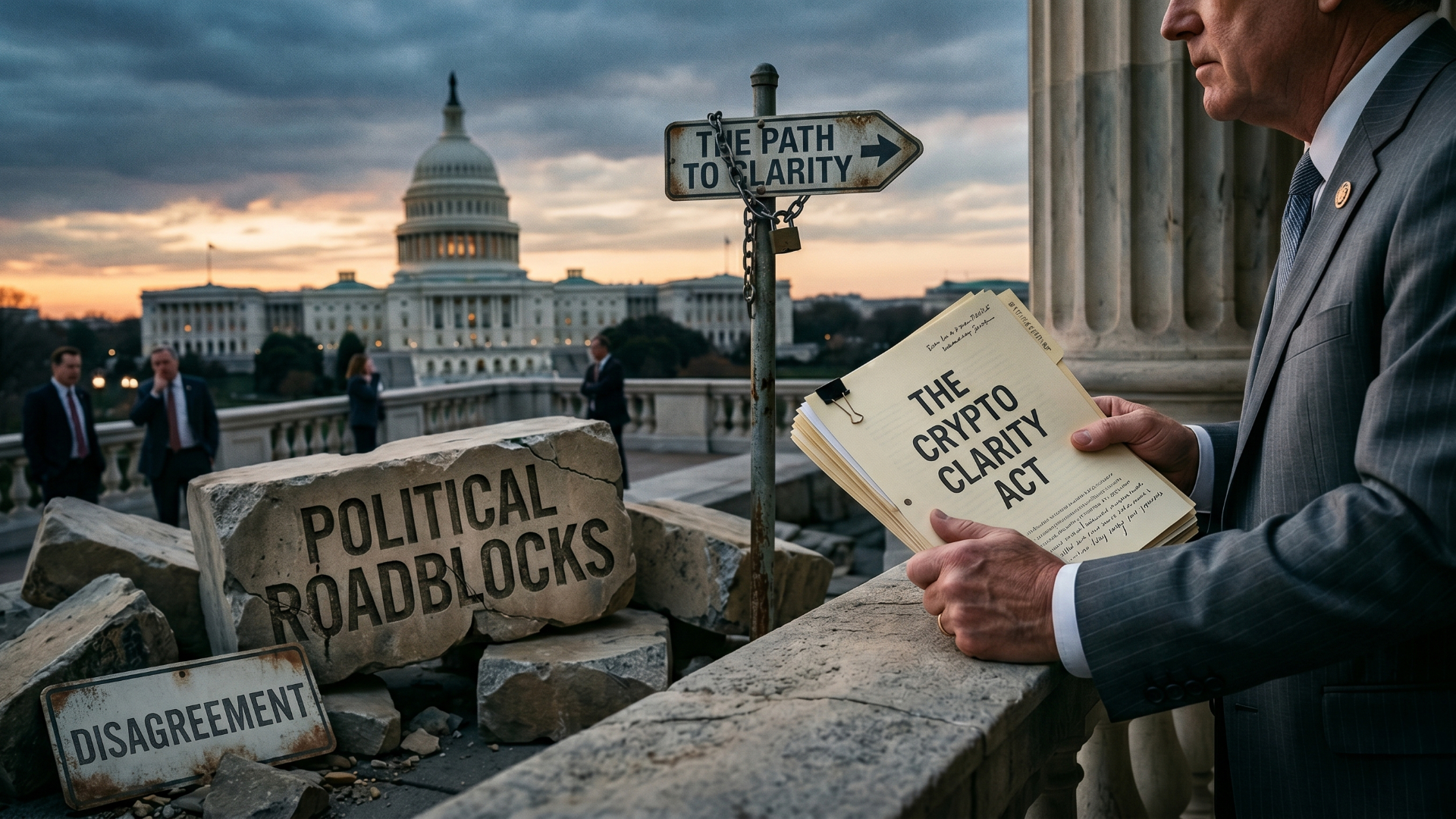
- TD Cowen put 2026 passage odds for the CLARITY Act near 30%, citing 5 obstacles beyond the stablecoin-yield fight.
- The House passed the Digital Asset Market Clarity Act by 294-134 in July 2025, but Senate Banking action remains stalled.
- Galaxy Research placed the odds closer to 50-50 and warned that failure this year could delay market-structure legislation until 2030 or beyond.
Crypto market-structure legislation faces a tightening Senate calendar after TD Cowen flagged five political and regulatory obstacles that could keep the CLARITY Act from passing in 2026 despite earlier House approval.
TD Cowen’s Washington Research Group put the bill’s odds near 30%, according to source summaries of the firm’s latest note.
The firm said the fight is no longer limited to stablecoin-yield language and now includes CFTC staffing, prediction-market disputes, World Liberty Financial scrutiny, Iran-related crypto concerns and possible competition from the Credit Card Competition Act.
Read more: Deutsche Bank: U.S. Crypto Adoption Rebounds as ETF Inflows Signal Institutional Return
Staffing And Scope
The Digital Asset Market Clarity Act passed the House on July 17, 2025, by a 294-134 vote, giving the crypto industry its strongest market-structure win to date.
Senate Banking Committee progress has since slowed as lawmakers debate regulatory authority, software developer liability and how much power should shift to the Commodity Futures Trading Commission.
But TD Cowen identified CFTC understaffing as a central practical problem because the agency would be expected to take on expanded digital-asset oversight if the bill advances.
Galaxy Research said a Senate Banking markup slipping past mid-May would sharply reduce the probability of enactment this year, and stated that Senator Cynthia Lummis has warned that failure in 2026 could push comprehensive market-structure legislation to 2030 or beyond.
Prediction markets add another complication, because the same regulatory category that has brought Kalshi, Polymarket and other platforms into the political spotlight now sits close to broader digital-asset negotiations, so it’s no wonder that it’s raising concerns about insider trading, event-contract boundaries and political conflicts.
Quite Some Time Has Passed Now
More than 270 days had passed since the House vote. That continued delay weakens Washington’s ability to set clear rules for trading venues, token issuers and decentralised software developers.
But that’s not all. TD Cowen also talked about the political sensitivity around World Liberty Financial, the Trump family-linked crypto venture, as a potential source of Democratic resistance. It recently locked its investors into a multi-year wait for token access, as Crypto News Australia reported.
The firm added that Iran-related crypto concerns could invite anti-money-laundering amendments, while the Credit Card Competition Act could become an unrelated rider that makes the package harder to pass.
Related: Strategy Blows Past 800K BTC With $2.5B Buy as Saylor Doubles Down
Credit: Source link