

Crypto fundraising, or funding rate, surged +50% to over $25.5Bn in the 12 months ending March 2026 compared to the previous year, despite a -46% drop in total deal volume, according to Messari data.
This divergence signals a stark consolidation of capital into late-stage mega-rounds as VCs retreat from speculative early-stage bets and concentrate on established infrastructure.
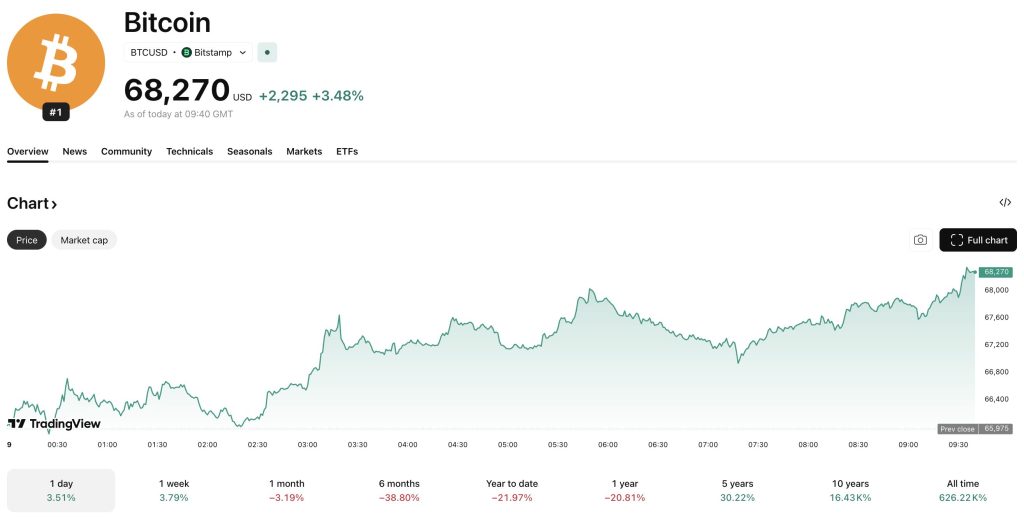
It comes as the total crypto market cap stayed flat overnight, dropping just -0.1% to $2.38 trillion, with the Bitcoin price trading at around $68,200 after a 0.7% move since yesterday.
Record Average Deal Size Marks Strategic Shift
Data from Messari CEO Eric Turner shows that the average crypto deal size swelled to $34M over the last year, up +272% from the prior period.
This comes as the raw count of finalized deals dropped by nearly half. Total funding hit $25.5Bn, but the distribution of that capital has shifted fiercely toward established players rather than seed-stage startups.
The divergence between rising dollar volume and falling deal count indicates a structural maturation. The “spray and pray” tactics common in previous cycles have been replaced by high-conviction bets.
While the headline funding number looks bullish, Turner noted that outside of Dragonfly Capital, few major crypto VCs have closed new funds recently.
DISCOVER: Next Crypto to Explode in 2026
Institutional Concentration and the ‘Flight to Quality’
The heavy skew toward mega-rounds signals that the crypto market structure is beginning to mirror traditional fintech.
Late-stage strategic rounds are now the primary driver of volume. Big investors see value in established networks and infrastructure rather than speculative tokens, evidenced by significant flows into major assets.
Capital concentration is evident in the declining number of active investors, which fell -34.5% to 3,225. This drop likely represents the exit of tourists and crossover funds that dabbled in crypto during the bull market but lacked the conviction to stay through volatility.
If this trend holds, early-stage founders may face a liquidity crunch while Series B and C companies command premium valuations.

February’s data illustrates the trend perfectly. Just three fundraising events contributed 44% of the $795M raised that month. Tether injected $200M into the marketplace Whop, while stablecoin app ARQ secured $70M in a Series B led by Sequoia Capital.
Prediction markets are also attracting significant capital. Novig raised $75M in a round led by Pantera Capital. That sector heat recalls how competitors like Kalshi and Polymarket discuss fundraising at valuations hitting $2Bn. Investors are chasing platforms with clear revenue models and regulatory moats rather than governance tokens with vague utility.
Despite these massive checks, the monthly total of $795M represented a -65.3% drop from the previous 30 days. This volatility in monthly figures further highlights the reliance on a few mega-deals to prop up the aggregate numbers.
Outlook for the 2026 Crypto Funding Landscape: Bullish Times Ahead?
The funding environment suggests the industry is prepping for a wave of public listings. Pantera Capital predicts 2026 will be a breakout year for digital asset IPOs, with companies like Circle and Figure paving the way.
However, broad market conditions remain a factor. Stocks must stabilize against bond market risk for these high valuations to hold in public markets.
Moving forward, expect the line between crypto VCs and traditional finance to blur further. Banks like JPMorgan and heavyweights like Sequoia are taking seats at the table that were once reserved for the crypto-native firms that dominated funding from 2017-2022.
If the “fresh capital” Turner referenced does not enter the ecosystem soon, the innovation pipeline could stall, but for now, the money is following maturity.
EXPLORE: Best Crypto Presales to Buy in 2026
The post Crypto Funding Jumps +50% Year Over Year Despite Fewer Deals appeared first on Cryptonews.
Credit: Source link



![[LIVE] Ethereum Price Developments, October 22: Live News and Price Updates as ETH Price Crashes to $3800](https://cryptoabc.net/wp-content/uploads/2025/10/eth.svg.svg+xml)