

- XRP dropped 10.5% over three days to US$1.44 but is retesting its bull flag breakout support at the 20-day EMA, with analysts targeting US$1.70–US$1.72 if support holds.
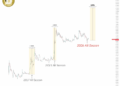
- Upbit processed over 30 million XRP withdrawals in one week while Coinone reserves fell 15% in 24 hours, matching patterns that preceded a 500% rally in 2021–2023.
- Whale flow averages turned positive for the first time since November 2025, though 60% of circulating supply remains at a loss, creating potential sell pressure if the US$1.50 resistance fails.
Heavy withdrawals from South Korea’s biggest crypto exchanges have shifted the view of XRP’s recent selloff, with some analysts treating the token’s 10.5% drop over the past three days as a possible accumulation phase rather than a breakdown.
CryptoQuant analyst CW said Upbit processed more than 30 million XRP withdrawals in one week, the highest weekly total on record, as wallets across most holder groups moved coins off exchanges.
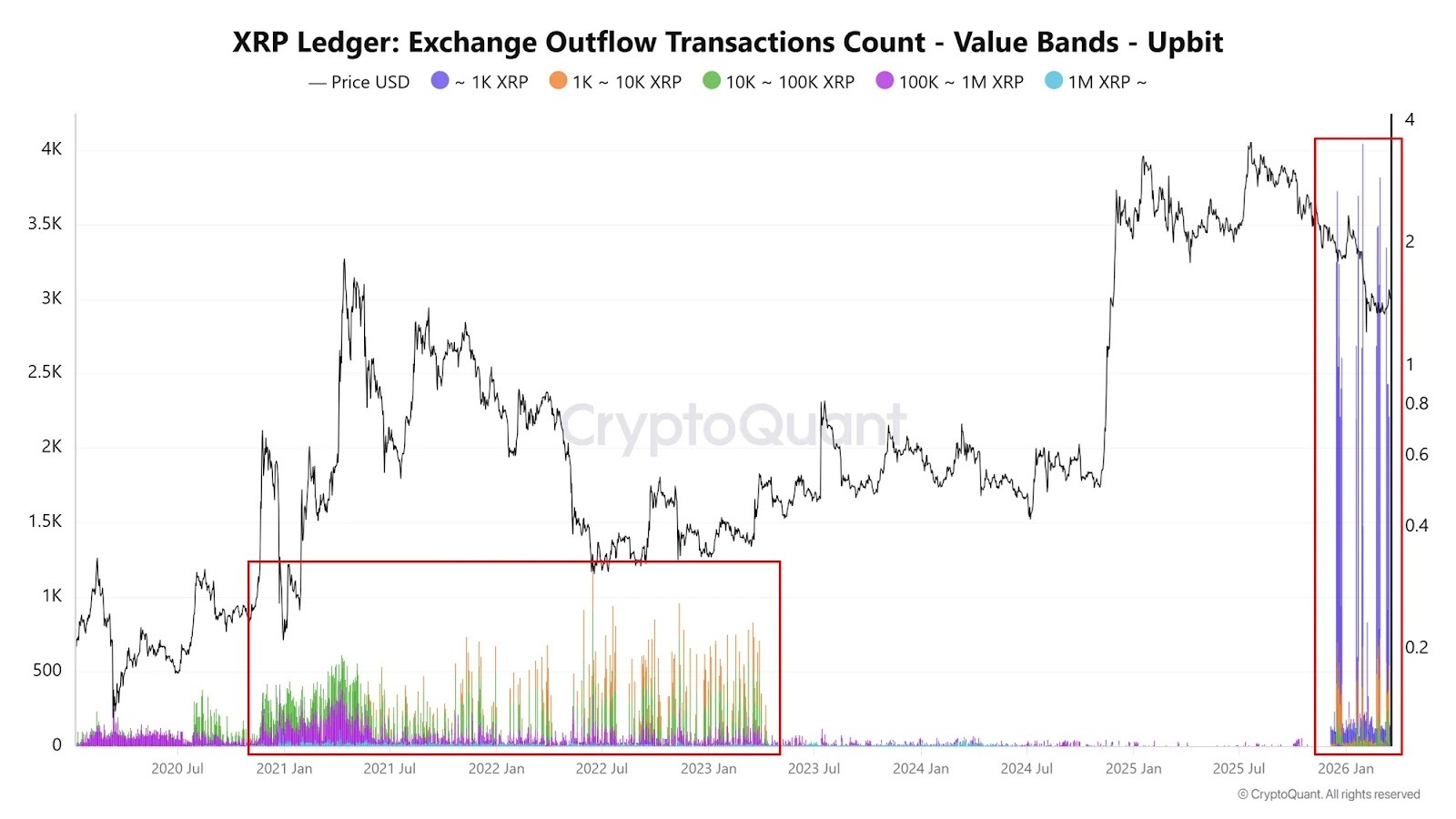
Coinone, another popular South Korean exchange, saw its XRP reserves fall 15% in 24 hours.
Together, the outflows were among the largest seen in the first quarter of 2026, with one outlet estimating net withdrawals from major exchanges at US$738 million (AU$1.13 billion) in a single day.
Read more: CryptoQuant: Bitcoin Faces Key Resistance at $75K and $85K Ahead of Fed Rate Decision
So, How’s It Looking For XRP?
At the time of analysis, XRP was trading near US$1.44 (AU$2.20). The token had broken above a bull flag pattern last week, then pulled back to test that breakout area as support.
That zone also matches the 20-day exponential moving average in the mid-US$1.40 range. If that support holds, the chart target stands at about US$1.70 to US$1.72 (AU$2.60 to AU$2.63), implying roughly 20% upside.
Moreover, CW stated that the 90-day whale flow average has turned positive after staying negative through most of 2024 and early 2025.
A similar shift previously came before XRP rose from US$2.20 (AU$3.37) to US$3.55 (AU$5.43) between April and September 2025. Earlier Korean exchange outflows from 2021 to early 2023 were also followed by a rally from below US$1 to above US$3.
The Bearish Case Persists, Though
Around 60% of XRP’s circulating supply is held at a loss, which could increase selling if the token cannot break through US$1.50. The daily chart still shows a descending channel from the US$3.50 peak, while the relative strength index remains below the neutral 50 level.
XRP is down 26% this year and about 41% over the past 12 months, so broader pressure remains in place, and analysts have linked that weakness to a hawkish Federal Reserve, crude oil above US$100 (AU$144) a barrel due to geopolitical tensions, and rising stablecoin competition.
Although network transaction volume has tripled to 2.7 million a day since mid-2025, they said much of that increase has come from RLUSD settlement and automated market maker activity rather than direct XRP demand.
Related: Citigroup Cuts Bitcoin and Ether Targets as U.S. Crypto Legislation Stalls
Credit: Source link